Barker Mediation Services

Grandparent Access Mediation

Grandparent Access Mediation
Image of MIAMS Mediation in process

Reconnect With the Grandchildren You Love

Being kept from your grandchildren is heartbreaking. Our specialist family mediators help grandparents find a peaceful, lasting path back to the children who need them — without costly court battles.

95% Resolution Rate

🛡️FMC Accredited Mediators

⚖️Legal Aid Available

💬Online Sessions

🕊️Confidential & Neutral

Grandparent Access Mediation

A Kinder Path to Seeing Your Grandchildren

Grandparent relationships are vital to children’s wellbeing — offering stability, love, and a sense of identity. When family breakdown, divorce, or conflict threatens this bond, the emotional cost for everyone — especially the children — can be immense.

At Barker Mediation, we understand how desperate and helpless this situation can feel. Our experienced family mediators specialise in helping grandparents navigate access disputes with sensitivity, skill, and genuine care.

Mediation provides a confidential, structured space where all parties can speak openly and work towards arrangements that put the children’s needs first — and keep your family together.

Our Process - How Grandparent Mediation Works
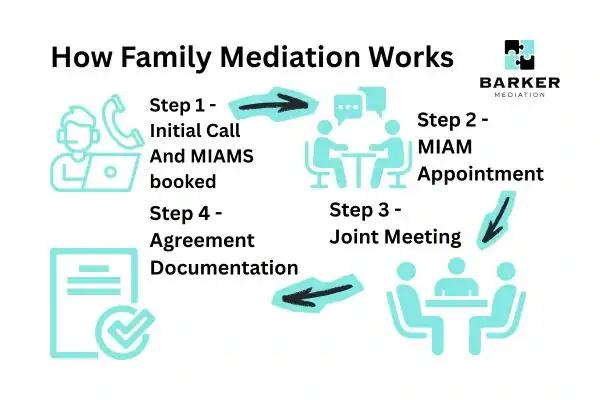
Graphic to show How family mediation works
Step 1 - Free Initial Call
Contact us by phone or online. We'll listen to your situation, answer your questions, and explain your options — with no pressure or obligation.
Step 2 - MIAMS Appointment
A private, confidential meeting with your mediator. We assess whether mediation is right for you and help you understand the process fully.
Step 3 - Joint Mediation
With all parties present (or separately if needed), your mediator guides structured, productive conversations focused on the children's best interests.
Step 4 - Reach an Agreement
We document any agreed arrangements clearly. These can be legally binding if both parties wish, providing everyone with long-term certainty.
Grandparent Access Mediation

Mediation vs. Court - Why Mediation Works Better for Grandparent Disputes

It is expensive, long and emotionally draining to go through the Courts to determine whether a grandparent should see their grandchildren, and the combative nature of this process can cause irreparable harm to families. A completely different experience is what mediation can offer you.
In England and Wales, a grandparent does not automatically have a legal right to see their grandchildren. Still, courts are often inclined to look more favourably on an application if an IFA have been followed. This good-faith effort is exactly what mediation shows us.

Benefits Of Grandparent Mediation Works

Far More Affordable
Sessions start from £120. Legal proceedings can run into thousands of pounds, with no guarantee of a successful outcome. Mediation resolves most disputes at a fraction of the cost.
Faster Resolution
Court cases can take 12–18 months. Most mediation cases reach an agreement in just a few sessions — meaning you see your grandchildren sooner.
Child-Focused Outcomes
Our mediators keep the children's emotional and practical needs at the heart of every discussion — not legal technicalities or adult grievances.
Preserves Relationships
Unlike court battles that create winners and losers, mediation builds understanding and cooperation — essential for long-term family harmony.
Understanding Your Position As A Grandparent
Grandparent Rights in England & Wales
Many grandparents are unsure of their legal standing. Here is what you need to know — and how mediation fits into the picture.
No
Automatic Legal
Right
Unlike parents, grandparents in England and Wales do not have an automatic right to contact. However, courts recognise that grandparent relationships are usually in a child's best interest.
Applying for a Child Arrangements Order
If mediation is unsuccessful, grandparents may apply to the family court for a Child Arrangements Order. You typically need leave (permission) from the court before applying.
MIAM Is Usually Required First
Before making a court application, you are generally required to attend a Mediation Information and Assessment Meeting (MIAM). We conduct these appointments at Barker Mediation.
Legal Aid May Be Available
If you qualify financially, legal aid may cover your mediation costs. Our team can advise you on eligibility and help you access this support.
Benefits Of Mediation
Attempting mediation before going to court shows the court you have acted in good faith and exhausted all reasonable options. It can significantly strengthen your position if a court application does become necessary.
Client Stories - Families We've Helped
After my son's divorce, I didn't see my grandchildren for eight months. Barker Mediation helped us all sit down and talk properly. Within six weeks, we had a regular contact agreement in place. I cannot thank them enough.
Margaret H.
Grandmother, Birmingham
The mediator was calm, professional, and never took sides. We were able to have conversations we couldn't have had without that neutral space. My grandchildren are back in my life.
Robert B.
Grandfather, Nottingham
I was told I'd have to go to court. Barker Mediation showed me there was another way. It saved me thousands of pounds and months of heartache — and my relationship with my daughter-in-law is actually better now.
Patricia L.
Grandmother, West Midlands
Frequently Asked Questions

Grandparent access disputes are emotionally complex and legally nuanced. Here are answers to the questions we hear most often.

Do grandparents have a legal right to see their grandchildren in England?

No, grandparents do not have an automatic legal right to contact with their grandchildren in England and Wales. However, courts widely recognise that a child’s relationship with their grandparents is usually beneficial to their welfare. If parents refuse reasonable contact, a grandparent can apply to the family court for a Child Arrangements Order — though they usually need the court’s permission first. Mediation is typically required before making such an application.

How can mediation help a grandparent gain access to their grandchildren?

Mediation provides a structured, neutral environment where grandparents and parents (or other guardians) can discuss the situation calmly with a trained mediator. The mediator helps identify the concerns of all parties and guides everyone towards a practical agreement — such as regular visits, holiday contact, or video calls. Because mediation is voluntary and collaborative, agreements reached tend to be respected and last longer than court-ordered judgments.

What if the parent or guardian refuses to attend mediation?

If the other party refuses to attend, your mediator will issue an MIAM certificate confirming that you attempted mediation in good faith. This certificate is required before you can apply to the family court. Courts look favourably on parties who tried mediation, and a refusal by the other side can be taken into account by the judge. We can also explore shuttle mediation, where parties don’t meet face-to-face but still negotiate through the mediator.

What is a MIAM, and do I need one as a grandparent?

A MIAM (Mediation Information and Assessment Meeting) is a private, individual appointment with one of our accredited mediators. It is your first step in the mediation process. During the MIAM, we explain how mediation works, assess whether it is suitable for your situation, and answer any questions you have. In most family law cases — including grandparent access disputes — attending a MIAM is legally required before you can make an application to court.

How much does grandparent mediation cost with Barker Mediation?

Our MIAM appointments and mediation sessions start from £125. The total cost depends on the number of sessions required and whether you attend in person or online. Most grandparent access cases are resolved in two to four sessions, making mediation significantly more affordable than legal proceedings, which can cost thousands of pounds. Legal aid may also be available — contact us to find out if you qualify.

Can mediation work if the family relationship is very hostile?

Yes. Our mediators are trained to work in high-conflict situations. If joint sessions are not appropriate at first, we can use shuttle mediation — meeting with each party separately in the same building or at different times. It allows discussions to proceed productively even when direct communication has broken down entirely. The goal is always to find a way forward for the sake of the children.

Is mediation confidential? Could anything I say be used against me in court?

Mediation is confidential. What is discussed during sessions cannot generally be referred to or used as evidence in court proceedings. This confidentiality is one of mediation’s greatest strengths — it allows everyone to speak honestly without fear that their words will later be weaponised. There are narrow exceptions, such as disclosures about safeguarding or harm to a child, but your mediator will explain these fully at the outset.

What happens if access is stopped following a bereavement, such as the death of my son or daughter?

It is a particularly painful situation we see regularly. When a parent dies, the surviving parent may restrict contact with that parent’s family — often at an already devastating time. Courts are increasingly sympathetic to grandparents in these circumstances, recognising how important it is to maintain that connection for the children’s identity and grief. Mediation can provide a gentle, compassionate way to open dialogue and establish contact, often without the need for court intervention.

How long does the mediation process take?

Mediation is considerably faster than going to court. The initial MIAM can often be arranged within a week or two of contacting us. Joint mediation sessions are typically 90 minutes, and most grandparent cases reach an agreement within two to four sessions. The entire process can often be completed within four to eight weeks — compared to court proceedings that can take a year or longer.

Can a mediation agreement be made legally binding?

The mediation agreement itself is not automatically legally binding, but both parties can choose to formalise it. A solicitor can draft a consent order, which is then submitted to the court for approval. Once approved by a judge, it becomes a legally enforceable court order. It reassures all parties of a formal arrangement without the stress and expense of contested court proceedings.

Can mediation include other family members, such as step-grandparents or aunts and uncles?

Yes. While our grandparent mediation service focuses primarily on grandparent access, the process can be broadened to include other extended family members where relevant. We will discuss the specific circumstances of your family during your initial call and MIAM to ensure the right people are included in the mediation process.

Can I get legal aid for grandparent mediation?

Depending on your financial circumstances, you may be eligible for legal aid to cover some or all of the costs of mediation. Legal aid for family mediation is means-tested. If one party qualifies for legal aid, the other party’s MIAM is often funded as well. Contact us, and we can advise you on eligibility and assist you with your application.

Grandparent Access Mediation

Ready to Take the First Step?

You don’t have to navigate this alone.

Our friendly, experienced mediators are here to help you find a way back to the grandchildren you love.

Call our team today on 03300 100 151 or complete form below.